
When it comes to cryptocurrency leverage trading, generating high win rates is only half the battle. The other hidden half that directly impacts your net profit is managing your Bybit Trading Fees. Many retail traders completely ignore how quickly maker and taker fees can drain their wallet balance, especially when using high leverage like 10x or 20x. Every time you enter and exit a position, the exchange takes a cut based on your total position size, not just your initial margin.
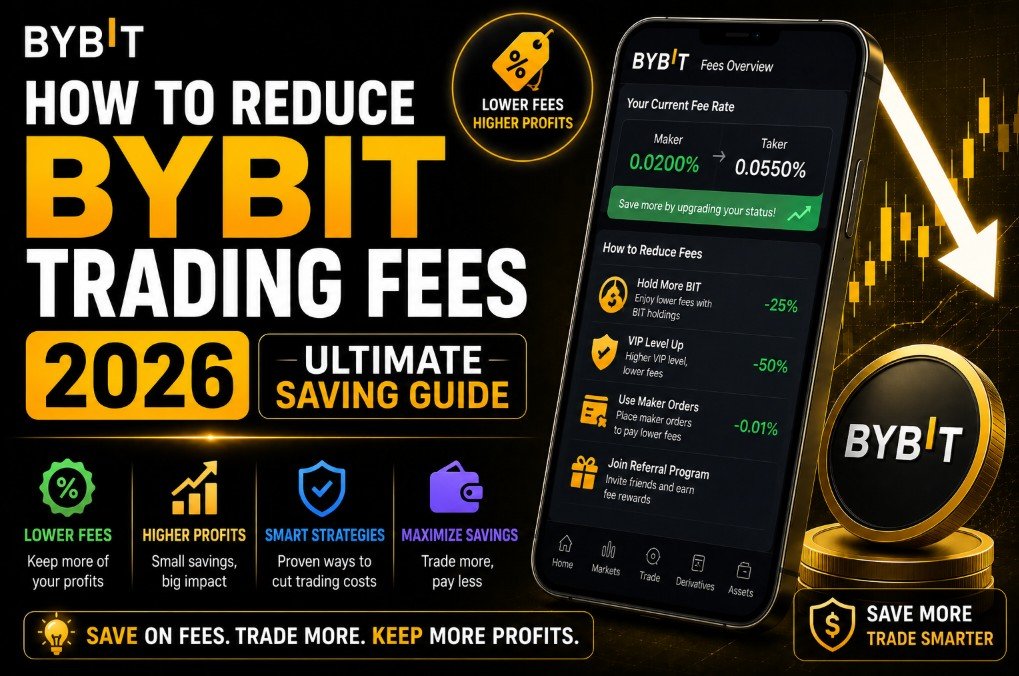
In this professional Bybit Trading Fees saving guide, we will break down the exact structure of the platform’s current fee schedule for 2026 and reveal the best verified methods to drastically slash your transaction costs to keep more profits in your pocket.
🎁 Instant Fee Cut: Don’t pay full price for your trades. Sign up through our official [Bybit Registration Link] right now to instantly claim an exclusive 20% fee discount for lifetime plus premium welcome rewards!
Understanding the Bybit Fee Structure: Maker vs. Taker
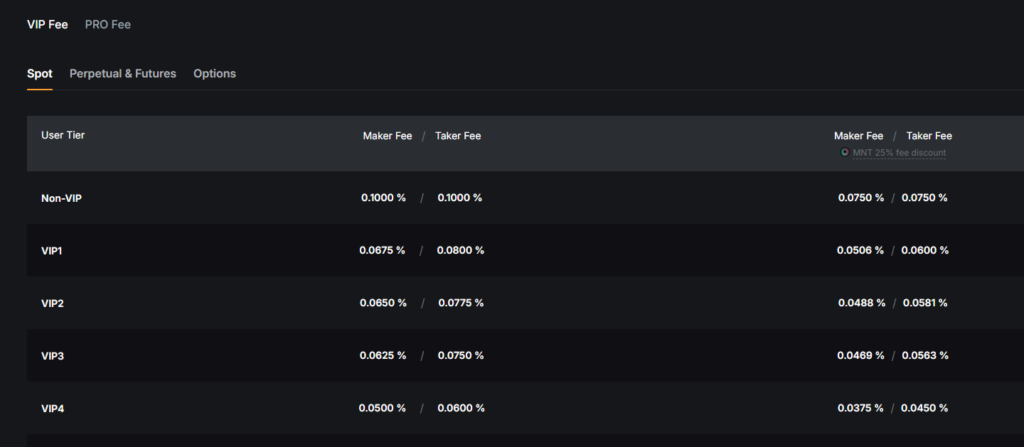
To effectively reduce your Bybit Trading Fees, you must first understand exactly how the exchange calculates them. Bybit categorizes every single order into either a “Maker” or a “Taker” fee based on execution type.
1. Maker Fees (Providing Liquidity)
A Maker order is placed when you submit a Limit order that does not execute immediately. Instead, your order sits patiently on the order book, adding liquidity to the market. Because you are helping the exchange maintain a healthy order book, Bybit rewards you with a significantly lower fee rate.
2. Taker Fees (Taking Liquidity)
A Taker order occurs when you execute a Market order or a Limit order that fills instantly against an existing order on the book. Since you are aggressively removing liquidity from the market for your own convenience, Bybit charges a relatively higher fee rate for this instant transaction.
The Hidden Math: How Leverage Multiplies Your Fees
One critical concept that readers of this Bybit Trading Fees guide must master is how leverage affects transaction costs. Bybit calculates fees based on the Position Value, which is your Margin multiplied by your Leverage.
🧮 The Formula: Position Value = Margin × Leverage
💸 Fee Cost: Position Value × Fee Rate
For example, if you open a position with $1,000 margin using 10x leverage, your actual trading position value is $10,000. Bybit will charge you fees based on $10,000, not your original $1,000. If you enter and exit with a Taker order, you could easily lose a significant percentage of your initial margin just to fees! This is why reducing your rate is absolutely non-negotiable.
3 Proven Methods to Lower Your Bybit Trading Fees
Now that you know the hidden math, let’s explore the absolute best strategic methods to lower your transaction costs dramatically.
Method 1: Use Our Premium Partner Registration Discount (Easiest)
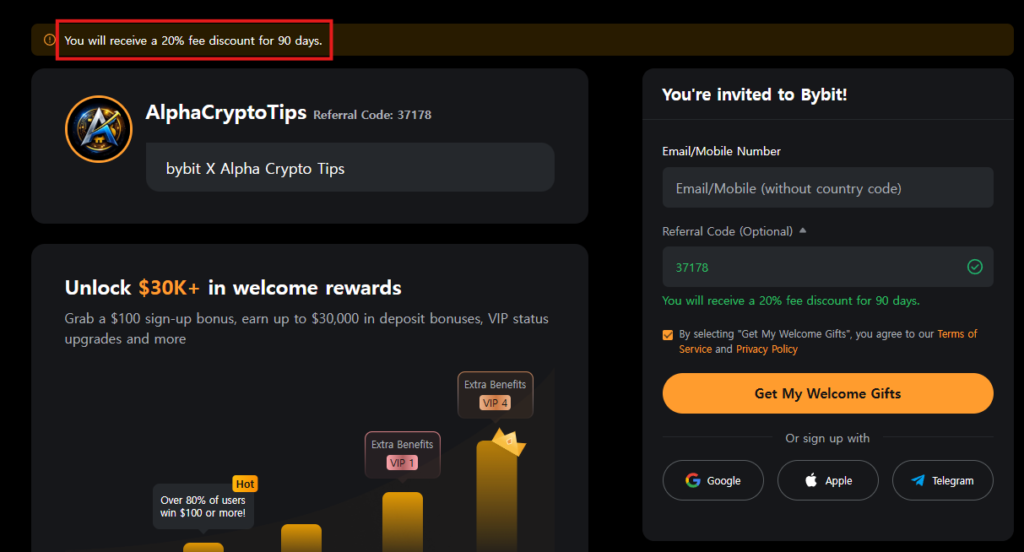
The simplest and most immediate way to drop your Bybit Trading Fees is to ensure your account is properly linked to a premium affiliate partner. By using our verified [Bybit Registration Link], a 20% discount is automatically applied to both your maker and taker fees for your first 30 days, which can be extended based on your ongoing monthly trading volume.
Method 2: Always Utilize Limit Orders (Maker Strategy)
As highlighted earlier in this Bybit Trading Fees guide, you should train yourself to use Limit orders instead of Market orders whenever possible. By patiently waiting for the market price to hit your specific target, you instantly save money by paying the cheaper Maker rate instead of the expensive Taker rate. Over hundreds of trades, this single habit will save you thousands of dollars.
Method 3: Climb the Bybit VIP Tiers
If you are a high-volume swing trader or day trader, you can organically unlock massive fee discounts by reaching Bybit VIP status.
- VIP Level 1: Achieved by hitting a 30-day trading volume of $10,000,000 or maintaining an account balance of $50,000.
- The Benefit: Once you hit VIP 1, your taker fees drop significantly, giving you a massive financial edge over average retail market participants.
Don’t Forget About Bybit Withdrawal Fees
While keeping trading fees low is vital, you also need to optimize your Withdrawal Fees when moving your profits off the exchange. Different networks charge completely different flat fees.
- Bitcoin (BTC) Network: Typically the most expensive and slowest network to use for withdrawals.
- TRC-20 (TRON) Network: Highly recommended for stablecoins like USDT. It usually costs only $1 to $2 per transaction and transfers within minutes.
- BSC (BNB Smart Chain): Another extremely cheap option for moving assets between supported platforms.
Conclusion: Stop Wasting Money on Unnecessary Fees
In the highly competitive world of crypto derivatives, every single dollar saved on transaction costs is a dollar added directly to your trading revenue. By combining a premium affiliate link, optimizing your order types to favor Maker execution, and selecting the right blockchain networks for withdrawals, you can successfully minimize your Bybit Trading Fees to the absolute bare minimum.
If you are new to the platform and need help getting your initial funds safely into your trading wallet, feel free to check out our complete [Crypto Deposit Guide] to avoid any costly cross-chain errors!
2 thoughts on “How to Reduce Bybit Trading Fees 2026: Ultimate Saving Guide”