
In the fast-paced and highly volatile cryptocurrency derivatives market, maximizing your win rate on charts is only half of the equation for long-term profitability. The other critical, yet frequently overlooked factor is managing your operational overhead—specifically, your Binance Trading Fees.

As the world’s largest cryptocurrency exchange by trading volume in 2026, Binance offers deep liquidity, but its maker and taker fees can rapidly compound and drain your capital account if you actively execute trades with high leverage. In this comprehensive Binance Trading Fees reduction guide, we will dissect the exchange’s current fee matrix and share the absolute best internal strategies to minimize your transaction drag by up to 50%.
🎁 Exclusive Kickback Offer: Why leave money on the table? Register your account through our official [Binance Registration Link] right now to instantly secure a lifetime 20% fee discount kickback and claim top-tier welcome rewards!
The Foundation: Deciphering Maker vs. Taker Fees on Binance
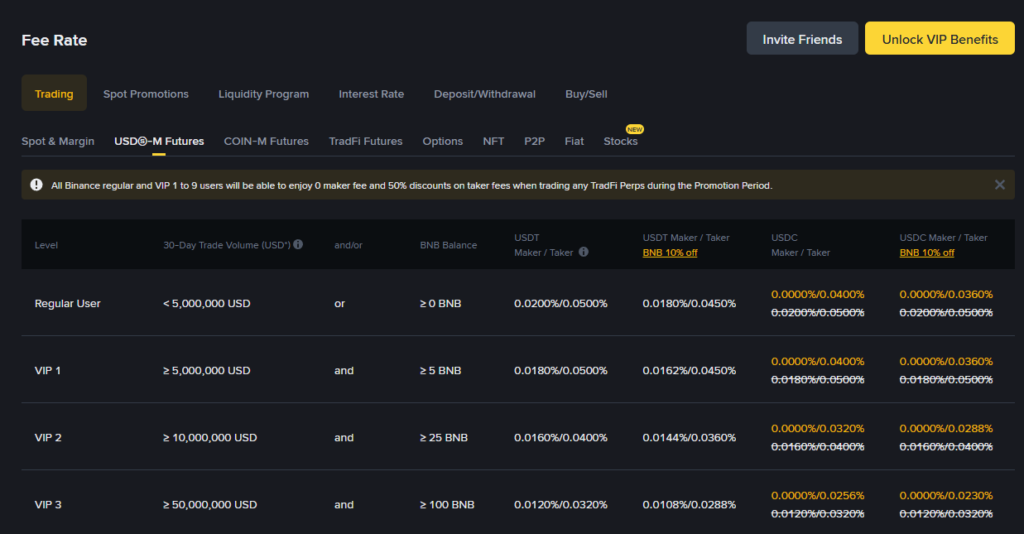
To successfully lower your Binance Trading Fees, you must thoroughly understand the mechanics of the platform’s order book. Your fee tier is completely determined by how your order interacts with market liquidity.
1. Maker Fees (Adding Order Book Liquidity)
A Maker order is a Limit order that does not match with an existing buyer or seller instantly. Instead, it sits on the order book, providing structural liquidity to the platform. Because you are assisting the exchange’s market depth, Binance rewards you with the lowest base fee rates available.
2. Taker Fees (Consuming Order Book Liquidity)
A Taker order occurs when you execute a Market order or an immediate Limit order that matches instantly against an open position on the book. Because you are aggressively removing liquidity for instant execution, Binance charges a higher Taker fee rate. For leveraged day traders, relying entirely on Taker orders can severely damage net monthly performance.
3 Proven Strategies to Reduce Your Binance Trading Fees by 50%
Achieving the coveted 50% fee reduction threshold requires a strategic combination of official affiliate partnerships and native platform utilities. Follow this exact blueprint:
Strategy 1: Register via a Premium Affiliate Link (Immediate 20% Off)
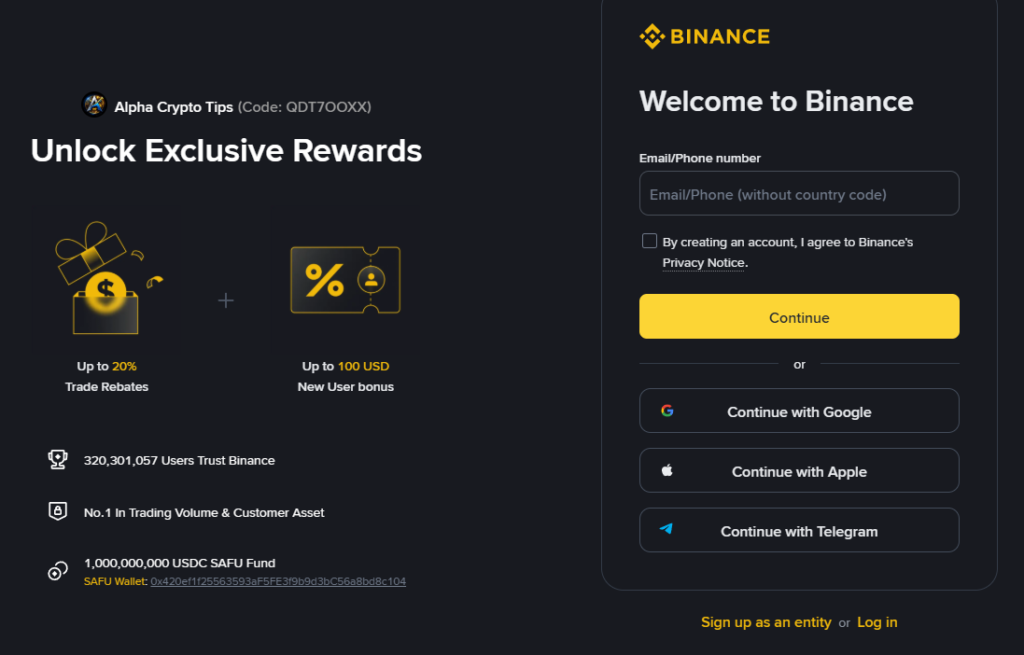
The foundational step to dropping your Binance Trading Fees is ensuring your account is tied to a verified high-tier affiliate program. Signing up through our exclusive [Binance Registration Link] automatically injects a permanent 20% fee kickback discount into your profile. This discount applies to every trade you settle, creating immediate passive savings from day one.
Strategy 2: Enable the BNB Fee Discount (Additional 25% Off)

Binance offers a massive built-in advantage through its native ecosystem token, BNB.
- Purchase a small amount of BNB and keep it in your Spot or Futures wallet.
- Navigate to your Binance Dashboard settings.
- Toggle the button that says “Use BNB to pay for fees”.
By activating this utility, Binance automatically grants you an extra 25% discount on Spot trading fees and a 10% discount on USDⓈ-M Futures trading fees. Combining this with your registration kickback gets you incredibly close to cutting your baseline costs completely in half.
Strategy 3: Optimize with Post-Only Limit Orders
To guarantee you always pay the cheaper Maker rate rather than the premium Taker rate, train yourself to use the “Post-Only” feature when setting Limit orders. This setting ensures your order will only be placed if it can act as a Maker. If the market moves too fast and tries to execute it as a Taker, the system will automatically cancel it, protecting your wallet from accidental high fees.
The Leverage Multiplication Warning
One core mathematical reality that users of this Binance Trading Fees guide must memorize is that trading costs are calculated on your Total Position Value, not your isolated margin.
🧮 The Formula: (Margin × Leverage Multiplier) × Fee Rate = Total Transaction Cost
If you open a position using a modest $1,000 of initial margin but apply 20x leverage, you are legally controlling a $20,000 position. Binance will assess your trading fees on that full $20,000 amount both when you open and when you close the position. Without our 50% reduction blueprint, fees alone could easily wipe out a massive portion of your actual risk capital.
Smart Exit: Choosing Cheap Withdrawal Networks
Minimizing overhead doesn’t stop at the trading panel. When transferring your profits off the exchange, you must bypass congested networks to avoid high flat gas fees.
- ERC-20 (Ethereum Network): Extremely expensive; avoid utilizing this network for small stablecoin transfers.
- BEP-20 (BNB Smart Chain) & TRC-20 (TRON): The absolute gold standards for cheap crypto transfers. Moving USDT via BEP-20 or TRC-20 typically costs a flat $1 to $2, saving you massive amounts during cashouts.
Conclusion: Run Your Crypto Trading Like a Business
Consistent profitability in crypto derivatives is built on thin margins. Treating your Binance Trading Fees as a serious business expense and aggressively cutting them down via premium referral links and BNB optimization is what separates successful professionals from retail traders.
Before you fund your account to start executing positions, be sure to read our highly detailed [Crypto Deposit Guide] to navigate your initial funds onto the platform without any technical errors!
1 thought on “Binance Trading Fees 2026: Ultimate 50% Saving Guide”