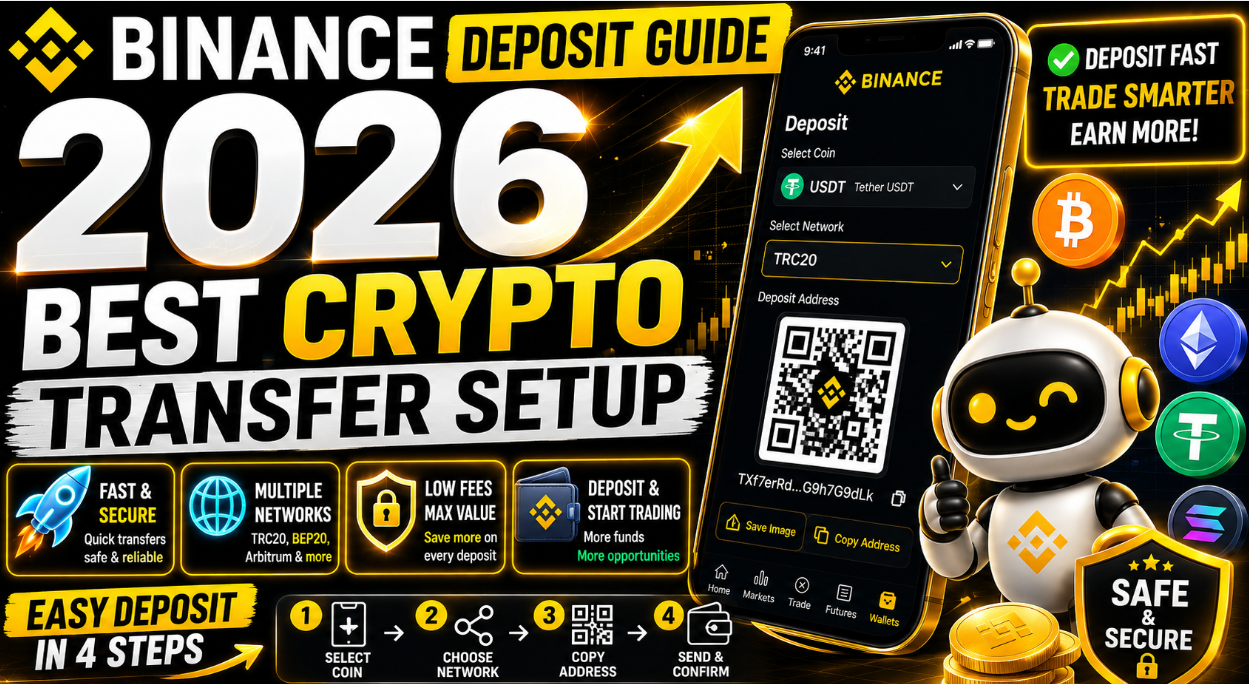
To fund your global digital currency portfolio and secure your structural margin allocation smoothly, deploying an industry-grade Binance Deposit Guide is a mandatory operational framework in 2026. The international cryptocurrency derivatives market operates with relentless transactional velocity, which heavily punishes manual entry mistakes with permanent ledger losses if network routing mechanisms are mixed up.
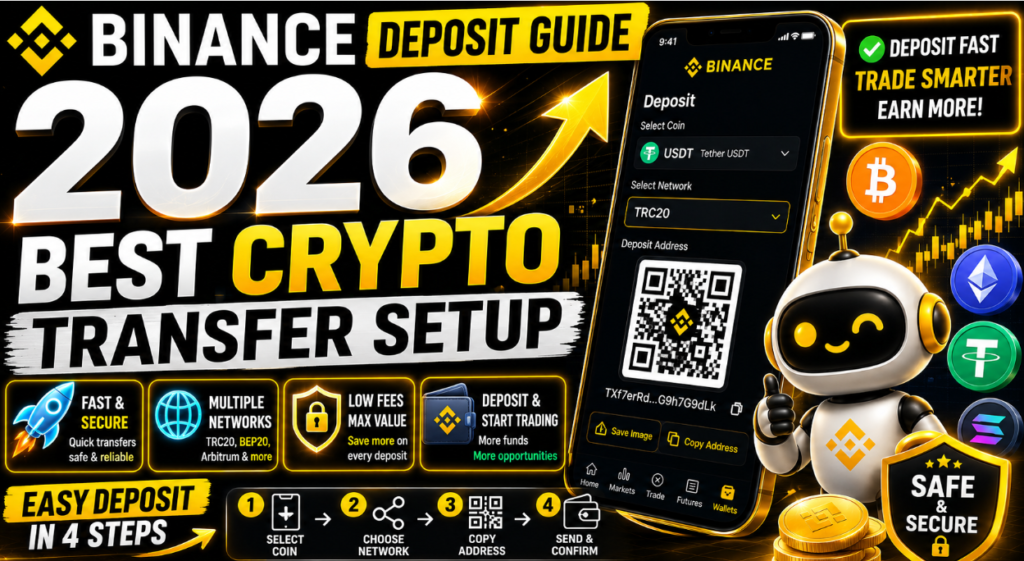
For professional day traders and newly registered retail speculators preparing to execute algorithmic high-frequency campaigns, establishing a fast, error-free funding protocol is the absolute priority. Binance provides a highly advanced, ultra-secure backend gateway built to process multi-chain incoming ledger updates instantly. In this technical Binance Deposit Guide, we will carefully break down the exact parameters of isolating your designated wallet coordinates and verifying network selections to guarantee your capital arrives safely without programmatic delays.
🎁 Premium Institutional Discretion: Ready to initialize your capital funding sequence under fully protected partner networks? Register your profile through our official [Binance Registration Link] right now to instantly activate a permanent 20% transaction fee kickback and unlock massive newcomer rewards!
The Network Validation Protocol: Preventing Cross-Chain Disasters
Before moving any alphanumeric string of characters onto your device clipboard, this operational Binance Deposit Guide emphasizes the absolute necessity of matching blockchain mainnets on both the originating and destination platforms.
A single misaligned click can cause your stablecoins to drift into an unrecoverable smart contract void. To achieve optimal funding results, speculators must prioritize channels that blend extreme confirmation speed with near-zero transaction costs.
🧱 High-Velocity Funding Channels Decoded:
- TRC-20 (Tron Mainnet): The undisputed industry favorite for moving stablecoins (USDT). It provides extreme throughput—usually settling in under three minutes—and enforces an incredibly low, predictable baseline flat fee.
- ERC-20 (Ethereum Network): Exceptionally secure and universally integrated, but highly vulnerable to aggressive gas fee inflation when decentralized finance volume spikes macroscopically.
- BNB Smart Chain (BEP-20): Binance’s native high-velocity scaling architecture that delivers ultra-cheap, near-instantaneous transfers for systemic capital adjustments.
Step 1: Accessing the Binance Crypto Inflow Dashboard
To capture your specific funding destination coordinates safely without getting turned around by the exchange’s expansive internal layout, implement this precise route:
- Account Protocol: Ensure your trading account is securely tracked under premium partner benefits by logging in via our verified [Binance Registration Link].
- Open Asset Vault: On the primary desktop interface ribbon, hover over the [Wallet] drop-down menu and select [Fiat and Spot].
- Initialize Deposit: Click the prominent [Deposit] action item, select [Deposit Crypto], and isolate your targeted asset (such as USDT) from the drop-down matrix.
Step 2: Executing Clipboard Safeguards and Tag Verifications
Once your technical variables render cleanly on the dashboard screen, this master Binance Deposit Guide highly discourages copying text blocks manually. Human error is an unnecessary systemic risk.
- The Copy Button Shortcut: Always click the built-in [Copy Address] interactive graphic icon. This fully guarantees that the extensive alphanumeric string is captured perfectly without truncating any starting or closing numbers.
- The Mandatory Memo Protocol: If you are transferring specific ledger assets like Ripple (XRP) or Stellar (XLM), Binance strictly requires both a master wallet address AND a unique numerical Deposit Memo/Tag. Omitting this secondary tag will cause the Binance vault to reject your transfer permanently.
Step 3: Enforcing the Low-Value Network Trajectory Test
The single most valuable defensive risk management strategy reinforced across this technical Binance Deposit Guide is avoiding bulk asset transfers on unverified blockchain channels.
🚨 The Fractional Funding Rule: Never push your entire master investment capital into a newly opened wallet address without completing a small Test Deposit first.
By executing a microscopic test transfer (such as $10 worth of Tether), you can securely confirm that the blockchain lane is completely open, the network parameters are perfectly synchronized, and the Binance backend credits your spot balance correctly. Once the test stablecoins register safely within your dashboard, you can deploy your remaining core portfolio size with complete peace of mind.
Conclusion: Protect Your Funded Margin via Optimized Fees
Mastering a secure funding pipeline is the foundational milestone required to transform your digital asset network into a high-frequency passive generator. As we close this foundational Binance Deposit Guide, always internalize that managing operational fee drag is the ultimate key to systemic compounding longevity.
To ensure your newly transferred funding capital is fully insulated against heavy exchange overhead, make sure to read our institutional manual on [How to Reduce Binance Trading Fees] to learn how to layer native BNB token deductions directly on top of your brand new trading network!