
If you are looking to maximize your trading capital efficiency and access a massive variety of high-yield altcoin markets, mastering crypto derivatives is an essential step. This comprehensive MEXC Futures Trading Guide is systematically designed to help both retail beginners and intermediate traders navigate the exchange safely in 2026.
MEXC has gained immense global popularity due to its high liquidity, rapid transaction matching engine, and zero-fee promotional structures that give traders a huge mechanical advantage. In this highly detailed MEXC Futures Trading Guide, we will carefully explain how the derivatives interface operates, how to configure your leverage settings intelligently, and how to open your very first position without exposing your portfolio to unnecessary mistakes.
🎁 Exclusive Affiliate Offer: Ready to trade with the lowest overhead on the market? Register your profile through our official [MEXC Registration Link] right now to instantly secure maximum trading fee discounts and unlock elite welcome rewards!
Setting Up Your Risk: Cross Margin vs. Isolated Margin
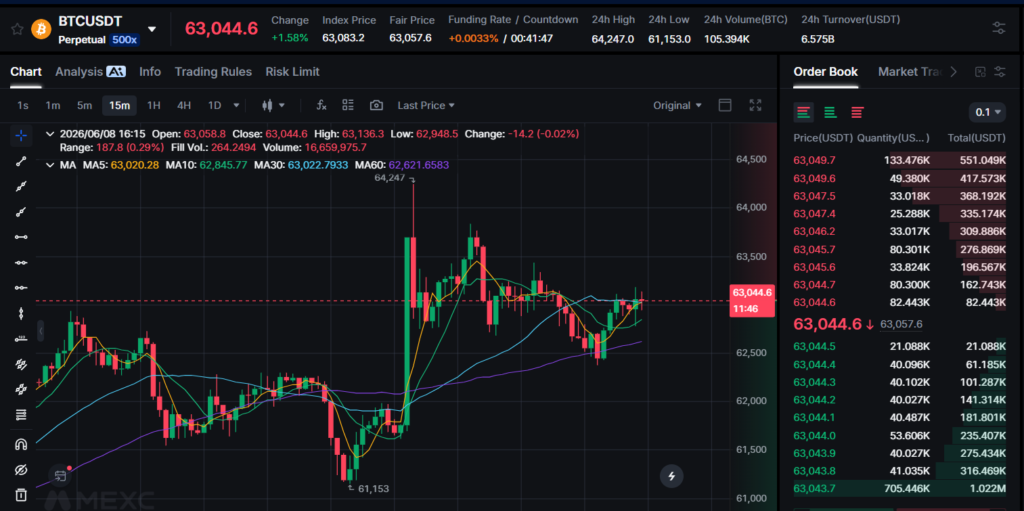
Before you authorize a single live contract on the order book, this MEXC Futures Trading Guide strongly emphasizes the absolute necessity of picking the correct margin mode. Your entire risk exposure is determined by this single choice.
1. Cross Margin Mode
In Cross Margin mode, the system uses the entire available balance within your futures wallet to support your open trades and prevent them from hitting liquidation. While this gives your position more breathing room during wild crypto price swings, a severe market crash against your direction can completely wipe out your entire account balance in an instant.
2. Isolated Margin Mode
In Isolated Margin mode, your financial risk is strictly confined to the exact amount of margin capital you allocated to that specific trade. If the trade hits its liquidation threshold, you only lose the initial margin assigned to that single position, keeping your remaining wallet balance completely safe. For all newcomers reading this tutorial, we explicitly recommend using Isolated Margin to protect your capital.
Step 1: Transferring Funds to the MEXC Derivatives Account
To start placing live leverage orders, you need to ensure your USDT stablecoins are positioned in the correct sub-wallet destination.
- Platform Access: Log in to the exchange via our verified [MEXC Registration Link] to guarantee all partner rebates and perks are fully active on your profile.
- Asset Transfer: Go to your wallet dashboard and transfer your USDT from the “Spot Account” over to the “Futures Account”.
- Enter the UI: On the top primary navigation bar, hover over [Futures] and select [USDT-M Perpetual], then select your preferred cryptocurrency pair (e.g., BTCUSDT).
Step 2: Configuring Leverage and Choosing Order Types
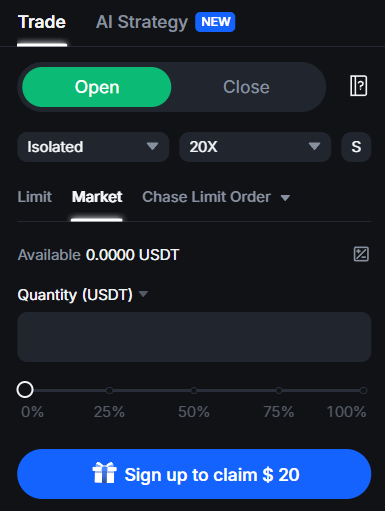
Leverage is a highly powerful tool that acts as a double-edged sword; it amplifies your financial gains just as quickly as it multiplies your trading losses.
Crucial Interface Settings:
- Adjust Leverage Scale: Modify your risk scale using the slider on the right side of the screen. MEXC allows massive leverage multipliers up to 200x on major pairs, but we strictly advise beginners to stay between 2x and 5x initially.
- Limit Orders: Enter a precise price target where you want your contract to execute. On MEXC, using limit orders allows you to act as a maker, which carries massive cost-saving benefits.
- Market Orders: This execution type fills instantly at the absolute best available current market price. Use this only during extreme market volatility when you must enter or exit a trade immediately.
Step 3: Opening Long and Short Positions Safely
The primary advantage highlighted throughout this MEXC Futures Trading Guide is the unique ability to generate consistent revenue regardless of whether the broader crypto market is moving up or down.
- Buy / Long Position: Execute a Long contract if your technical chart analysis suggests the asset price is poised to rise.
- Sell / Short Position: Execute a Short contract if your chart analysis indicates the asset price is preparing to drop.
⚠️ Inviolable Risk Rule: Never enter an open position without immediately configuring your Take Profit (TP) and Stop Loss (SL) targets. Setting these automated parameters protects your account from sudden liquidations while you are away from the computer or sleeping.
Understanding MEXC’s Unique Funding Rate Structure
Leveraged perpetual contracts utilize a mechanical system known as the Funding Rate to ensure futures prices stay tightly pegged to the actual spot market price. This rate is exchanged directly between long and short position holders.
- How It Works: Payments occur at designated intervals throughout the day. If the rate is positive, longs pay shorts; if the rate is negative, shorts pay longs.
- On MEXC, paying attention to the funding countdown clock on the dashboard is highly vital if you plan on holding large, highly leveraged swing positions across the daily settlement hours.
Conclusion: Link Your Strategy with Low Transaction Costs
Developing consistent profitability in the crypto derivatives market requires incredible emotional discipline and strict risk control. As we wrap up this MEXC Futures Trading Guide, always remember that preserving your trading capital is your number one priority.
To maximize your net trading revenue, you must also eliminate transaction friction. Be sure to read our ultimate guide on [How to Reduce MEXC Trading Fees] to learn how to utilize their legendary 0% maker promotions and partner discount accounts to eliminate unnecessary costs completely!
1 thought on “MEXC Futures Trading Guide 2026: How to Trade Safely”